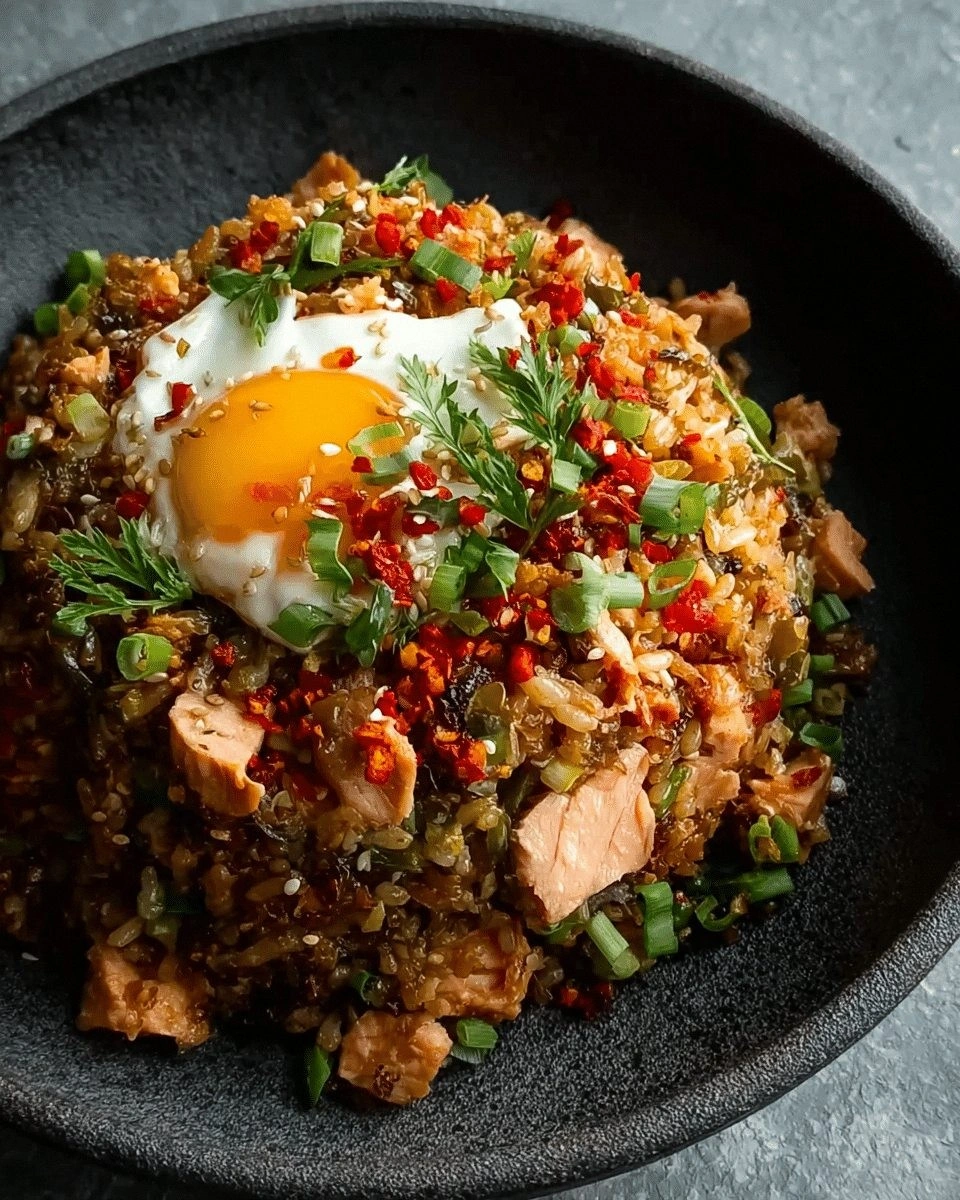
Picture this: I’m standing in a cramped kitchen, a single burner, a half‑cooked salmon fillet that’s already started to look like a sad, pink puddle, and a bag of rice that’s been sitting in the fridge for a week. I had a craving for something that could turn that sad puddle into a mouth‑watering, aromatic dish, and a dare from my friend to create the best fried rice of our lives. I was ready to turn my kitchen disaster into a triumph, and I’ve never been more excited to share the recipe that turned that moment into a culinary revelation.
I could almost taste the smoky caramelization of the rice as the pan sizzled, hear the sharp snap of fresh ginger hitting hot oil, and feel the comforting warmth of the skillet against my palm. The aroma of garlic and scallions mingled with the scent of fresh salmon, creating a bouquet that made my mouth water before I even tasted the first bite. Every sense was in sync, from the visual cue of golden, crisp edges to the textural contrast of flaky fish against tender grains. This dish doesn’t just satisfy hunger; it delivers a sensory fireworks show that lingers long after the plate is cleared.
What sets this version apart isn’t just the combination of ingredients—it’s the way I’ve distilled the essence of Guizhou’s bold flavors into a dish that feels both authentic and approachable. I’ve stripped away the fluff and kept only the core elements that make the dish sing: a bright, umami‑rich sauce, a delicate balance of heat, and that unmistakable “fried rice” crunch that everyone loves. The result is a dish that’s hands‑down the best version you’ll ever make at home, and I dare you to taste this and not go back for seconds.
If you’ve ever struggled to get fried rice that’s both flavorful and not greasy, you’re not alone. I’ve spent countless hours tweaking ratios, timing, and techniques until I found a method that delivers consistent, restaurant‑quality results. And that’s why I’m excited to walk you through every single step—by the end, you’ll wonder how you ever made it any other way.
What Makes This Version Stand Out
- Authenticity: The sauce blends soy, oyster, and a splash of Chinese rice wine, capturing the deep umami profile of Guizhou cuisine. The subtle heat from Sichuan peppercorns adds a numbing kick that sets this dish apart from ordinary fried rice.
- Texture: The rice is pre‑cooked and chilled, ensuring each grain stays separate and crisp. The salmon is pan‑seared to create a caramelized exterior while keeping the inside moist.
- Flavor Balance: Sweet, salty, spicy, and umami are all present in perfect harmony. The fresh herbs and scallions add brightness, while the toasted sesame oil brings depth.
- Simplicity: Despite the complex flavor profile, the recipe uses only a handful of pantry staples and fresh ingredients. No exotic sauces or hard‑to‑find spices.
- Make‑Ahead Friendly: The dish can be prepared in advance, and the flavors only deepen overnight. It’s ideal for busy weeknights or last‑minute dinner parties.
- Crowd‑Pleaser: Whether it’s a family dinner or a gathering of friends, this dish delivers a wow factor that will have everyone asking for the recipe.
- Ingredient Quality: Fresh salmon, high‑quality soy sauce, and freshly cracked pepper are the cornerstones. Using the best ingredients elevates the entire dish.
- Versatility: You can swap the salmon for shrimp, tofu, or chicken, making the recipe adaptable to dietary preferences.
Alright, let’s break down exactly what goes into this masterpiece…
Inside the Ingredient List
The Flavor Base
The backbone of this dish is the sauce—a harmonious blend of soy sauce, oyster sauce, and a splash of Shaoxing wine. The soy sauce provides the salty depth, while the oyster sauce adds a subtle sweetness and thickness. The wine brings a fragrant, mellow note that cuts through the richness of the salmon. Together, they create a sauce that coats the rice and fish like velvet, delivering a savory punch that lingers.
If you’re in a pinch and can’t find oyster sauce, a mixture of soy sauce and a few drops of fish sauce will do the trick. Just remember to adjust the saltiness—fish sauce is saltier, so use it sparingly. The key is to taste as you go; the sauce should feel balanced, not overpowering.
The Texture Crew
Rice is the star of any fried rice recipe, but not all rice is created equal. Use day‑old, jasmine or long‑grain rice that’s been cooled in the fridge. The chilled rice prevents clumping and ensures a light, airy texture. If you’re using fresh rice, spread it on a tray and let it cool for at least 30 minutes—this mimics the day‑old effect.
The salmon is the protein hero. Choose a firm, fresh fillet that can hold its shape when seared. Slice it into bite‑sized cubes to ensure even cooking. If you prefer a milder flavor, you can marinate the salmon briefly in a little soy sauce and ginger; just don’t overdo it, or you’ll lose that delicate fish taste.
The Unexpected Star
Sichuan peppercorns are the secret weapon that gives this dish its signature numbing heat. They’re not just about spiciness; they add a citrusy, floral note that brightens the entire plate. Use a small amount—just a pinch—to avoid overwhelming the palate.
If you’re new to Sichuan peppercorns, try grinding them in a mortar or spice grinder until they’re a fine powder. This releases their essential oils and ensures even distribution throughout the dish.
The Final Flourish
Fresh scallions, toasted sesame seeds, and a drizzle of sesame oil are the finishing touches that elevate the dish. The scallions add a fresh, sharp bite, while the sesame seeds provide a nutty crunch. Sesame oil, with its toasted flavor, ties everything together and gives the dish a glossy sheen.
Don’t skip the sesame oil—its aroma is a hallmark of authentic fried rice. If you’re low on sesame oil, a light splash of toasted coconut oil can substitute, but the flavor will be noticeably different.
Everything's prepped? Good. Let’s get into the real action.
The Method — Step by Step
- Heat a large wok or skillet over medium‑high heat until it’s smoking. Add 2 tablespoons of vegetable oil, swirling to coat the bottom. When the oil shimmers, add the diced salmon in a single layer, letting it sear without stirring for 2 minutes. Flip once and cook for another 2 minutes until golden and just cooked through. This step is the moment of truth—watch the salmon caramelize like a caramelized sugar glaze.
- Remove the salmon and set aside. In the same pan, add the minced garlic and ginger, sautéing for 30 seconds until fragrant but not browned. Add the chopped scallions, leaving the white parts for the next step. This will build a flavor base that’s the foundation of the dish.
- Add the chilled rice to the pan, breaking up any clumps with a spatula. Stir-fry for 3–4 minutes, letting the rice toast slightly. The rice should smell toasty, like toasted bread, and develop a subtle nutty aroma. Keep the heat high to achieve that classic fried‑rice crunch.
- Whisk together the soy sauce, oyster sauce, Shaoxing wine, a splash of sesame oil, and a pinch of Sichuan peppercorn powder. Pour this sauce over the rice, tossing vigorously to coat every grain. The sauce should coat the rice like velvet, giving it a glossy sheen.
- Return the salmon to the pan, gently folding it into the rice. Add a handful of toasted sesame seeds and a drizzle of sesame oil. Stir until everything is evenly distributed. The fish should be heated through but still tender.
- Add the white parts of the scallions, a pinch of salt, and freshly ground pepper. Stir and let the mixture cook for another 2 minutes, allowing the flavors to meld. The rice should have a slightly caramelized crust, and the edges will start pulling away from the pan.
- Taste and adjust seasoning if needed—add more soy sauce for saltiness or a touch of sugar for sweetness. Once satisfied, remove from heat.
- Serve immediately, garnished with extra scallions and a squeeze of fresh lime for brightness. The dish should feel like a warm hug with a kick of heat and a burst of umami.
That’s it—you did it. But hold on, I’ve got a few more tricks that will take this to another level.
Insider Tricks for Flawless Results
The Temperature Rule Nobody Follows
Maintaining a consistent high heat is crucial for that coveted sear on the rice and salmon. If the heat dips too low, the rice will steam instead of fry, resulting in a soggy texture. I keep a small thermometer in the pan to ensure it stays around 400°F. When the temperature drops, just add a splash of oil to re‑ignite the heat.
Why Your Nose Knows Best
Trust your sense of smell during cooking. The moment the rice starts to toast, you’ll notice a nutty, toasted aroma—this is your cue to move on to the next step. If you’re unsure, close your eyes and inhale; the scent of toasted sesame oil and ginger should be unmistakable.
The 5-Minute Rest That Changes Everything
After you finish cooking, let the dish rest for 5 minutes before serving. This allows the flavors to settle and the rice to firm up slightly, giving it a more cohesive bite. I always cover the pan with a lid to trap steam during this brief rest.
A Pinch of Freshness
Adding fresh lime juice just before serving brightens the dish and cuts through the richness of the salmon. It also adds a subtle citrus note that pairs beautifully with the Sichuan peppercorns. Squeeze just enough to taste—over‑doing it will wash out the umami.
The Secret to Crispy Edges
If you like a crispy rice crust, leave a portion of the rice on the pan’s edge and let it caramelize for an extra minute before stirring. This creates a delightful contrast between the soft interior and the crisp exterior.
Creative Twists and Variations
This recipe is a playground. Here are some of my favorite ways to switch things up:
Shrimp Surprise
Swap the salmon for peeled and deveined shrimp. Sauté the shrimp separately until pink, then fold them in at the end. The shrimp adds a sweet, briny flavor that complements the sauce beautifully.
Tofu Tingle
Use firm tofu cubed and pan‑fried until golden before adding to the rice. The tofu absorbs the sauce, delivering a hearty, plant‑based protein that’s still packed with flavor.
Spicy Kimchi Kick
Stir in a handful of chopped kimchi during the final stir. The fermented tang adds depth, while the chili flakes in the kimchi bring an extra layer of heat.
Vegetable Medley
Add diced carrots, peas, and corn to the pan before the rice. These veggies bring color, crunch, and a subtle sweetness that balances the savory sauce.
Miso Magic
Replace half of the soy sauce with white miso paste. The miso introduces a creamy, umami richness that pairs wonderfully with the salmon.
Storing and Bringing It Back to Life
Fridge Storage
Cool the dish completely before placing it in an airtight container. Store in the fridge for up to 3 days. The flavors will deepen, and the rice will retain its texture if you reheat properly.
Freezer Friendly
Pack the dish in a freezer‑safe container, leaving a little headspace. Freeze for up to 2 months. When ready, thaw overnight in the fridge before reheating.
Best Reheating Method
Reheat in a skillet over medium heat, adding a splash of water or broth to steam the rice back to life. This technique prevents the rice from drying out and keeps the salmon moist. Finish with a drizzle of sesame oil to restore that glossy finish.