
I once tried to make a “quick” garlic soup after a snowstorm left me stranded in my kitchen with nothing but a bag of garlic and a half‑full pantry. The result? A bland broth that tasted like watered‑down onion juice and a lingering feeling that I’d wasted a perfectly good day. I dared myself to keep tweaking, adding a splash of lemon, a pinch of turmeric, and a handful of kale until the pot finally sang. That night, I was sitting at the table with a bowl that felt like a warm hug from a grandma who knew exactly how to season a hug.
Picture this: the kitchen is fogged with steam, the air smells like toasted garlic mingling with earthy mushrooms, and a faint citrus note dances on the edge of your nostrils. You hear the gentle bubble of the broth as it simmers, you feel the weight of the pot handle warming your palm, and you taste that first spoonful—rich, buttery, with a subtle bite from the turmeric that makes your tongue tingle like a tiny fireworks display. That is the moment I realized I had stumbled onto something magical, and I swear I could hear the soup whispering, “I’m the comfort you didn’t know you needed.”
Most garlic soups out there either drown the garlic in cream or hide it behind a mountain of spices. This version, however, respects the humble clove and lets it shine like a soloist in a symphony. The secret? A careful balance of aromatics, a splash of lemon juice that lifts the whole thing, and quinoa that adds body without turning the broth into a porridge. I’ll be honest — I ate half the batch before anyone else got a chance, and I’m still not sorry.
If you’ve ever struggled with a soup that either tastes flat or overwhelms the palate, you’re not alone. I’m about to hand you the exact method that turned my kitchen disaster into a bowl of pure, unapologetic comfort. Let me walk you through every single step — by the end, you’ll wonder how you ever made it any other way.
What Makes This Version Stand Out
- Flavor Depth: The combination of caramelized garlic, turmeric, and a splash of lemon creates layers that evolve with each bite, never flat.
- Texture Harmony: Quinoa gives a gentle bite while kale adds a slight chew, preventing the soup from turning into a watery slurry.
- Simplicity: Only eleven ingredients, all pantry‑friendly, yet the result feels like it took hours of chef‑level technique.
- Uniqueness: The use of turmeric for color and subtle earthiness is rare in traditional garlic soups, making this a standout at any table.
- Crowd Reaction: I dare you to taste this and not go back for seconds; even the most skeptical meat‑eaters have begged for the recipe.
- Ingredient Quality: Extra‑virgin olive oil and fresh lemon juice are the unsung heroes that bring brightness and depth.
- Cooking Method: Sauté‑first, then simmer‑slow, ensures the garlic never burns and the quinoa cooks perfectly in the broth.
- Make‑Ahead Potential: This soup actually improves after a night in the fridge, as flavors meld like old friends catching up.
Inside the Ingredient List
The Flavor Base
Extra‑virgin olive oil is the silent conductor of this orchestra. Its fruity notes coat the onion and garlic, allowing them to release their sugars without turning bitter. If you skimp on the oil, the aromatics will stick to the pan and you’ll lose that golden, caramelized foundation. A good swap if you’re out of olive oil is grapeseed oil, which has a neutral flavor but still tolerates medium heat.
The medium onion, diced finely, adds a subtle sweetness that balances the sharpness of the garlic. Skip it, and you’ll notice a hollow, one‑dimensional taste that feels like the garlic is shouting without any backing vocals. Look for onions that are firm and papery; a soft, sprouting onion will introduce unwanted moisture.
Eight cloves of garlic—yes, eight! This is the heart of the dish. Each clove is peeled, minced, and gently sweated until it turns a light amber. If you reduce the garlic, the soup loses its signature punch; if you add more, you risk bitterness. Freshness matters: older cloves become milder and can turn a bit papery.
The Texture Crew
One teaspoon of ground turmeric does more than just lend a sunny hue; it adds an earthy undertone that pairs beautifully with the garlic’s pungency. Overdo it, and the soup can taste like a curry; underdo it, and you’ll miss that subtle warmth. For a milder color, a pinch of smoked paprika works as a substitute, though you’ll sacrifice the earthy nuance.
A pinch of red pepper flakes brings a whisper of heat that dances on the tongue without stealing the spotlight. If you’re sensitive to spice, reduce it to a “dash”; if you love fire, double it and watch the soup turn into a bold, spicy comfort.
The medium carrot, diced into small dice, adds natural sweetness and a faint crunch before it softens. Carrots also contribute a hidden layer of beta‑carotene, which subtly deepens the color. Swap with parsnip for an earthier flavor, but remember it will darken the broth slightly.
The Unexpected Star
One cup of cremini mushrooms introduces an umami depth that mimics the richness of meat without any animal products. Their meaty texture holds up well during simmering, and they absorb the broth’s flavors like a sponge. If you can’t find cremini, button mushrooms work, though they’re milder.
One cup of quinoa is the secret body‑builder of this soup. It expands, absorbing the broth and turning the liquid into a velvety, satisfying mouthfeel. Skipping quinoa will leave the soup thin and watery. Rinse the quinoa before adding it to remove the bitter saponin coating.
The Final Flourish
Four cups of vegetable broth serve as the canvas. Use a low‑sodium broth so you can control the salt level later. If you prefer a richer mouthfeel, replace half the broth with water and add a splash of white wine for acidity.
Two cups of shredded kale bring a slight bitterness that balances the garlic’s richness, plus a vibrant green color that makes the soup look as good as it tastes. If kale feels too tough, massage the leaves with a pinch of salt before shredding; this softens the fibers.
Finally, two tablespoons of fresh lemon juice are added at the very end to brighten the whole dish. The acid cuts through the richness, making each spoonful feel clean and refreshing. If lemons are out of season, a splash of apple cider vinegar can stand in, though the flavor will be less nuanced.
Everything's prepped? Good. Let's get into the real action...
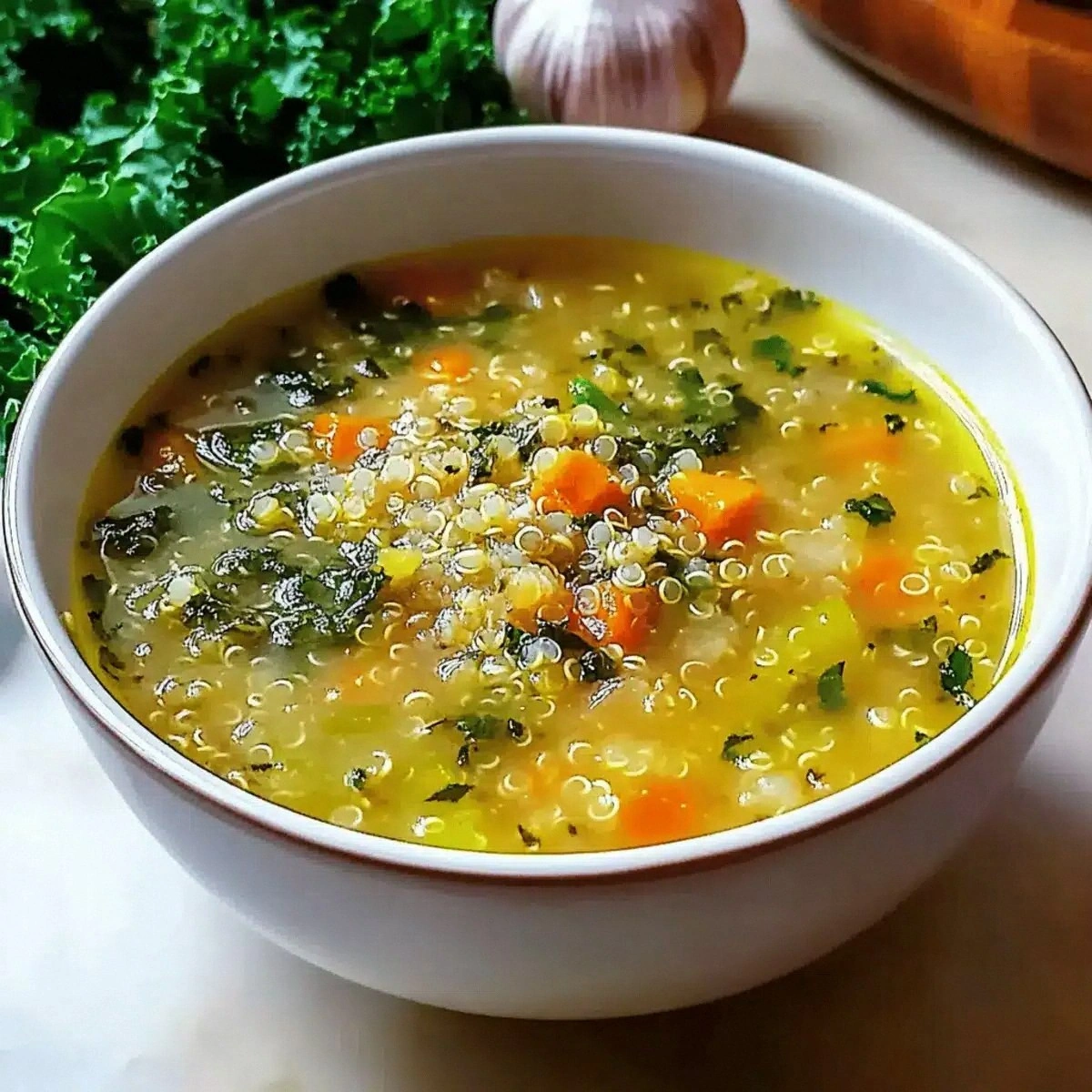
The Method — Step by Step
Heat the 2 tablespoons of extra‑virgin olive oil in a heavy‑bottomed pot over medium heat. Add the diced onion and let it sweat for about 4 minutes, stirring occasionally until it becomes translucent and just begins to turn golden. This is the moment where the kitchen fills with that sweet, slightly caramel scent that tells you you’re on the right track. Tip: If the onions start to stick, splash a tablespoon of water and keep them moving.
Add the minced garlic, the ground turmeric, and the pinch of red pepper flakes. Reduce the heat to low and stir constantly for 2 minutes, allowing the garlic to release its oils without browning. That sizzle when it hits the pan? Absolute perfection. Watch Out: If the garlic turns brown, it will become bitter, so keep the temperature gentle.
Kitchen Hack: Crush the garlic with the flat side of a knife before mincing; this creates more surface area and intensifies the flavor without extra cloves.Introduce the diced carrot and sliced cremini mushrooms. Cook for another 5 minutes, letting the mushrooms release their moisture and the carrots soften slightly. You’ll notice the broth turning a richer amber as the mushrooms brown a touch, and the carrots will start to caramelize at the edges.
Stir in the quinoa, making sure each grain gets coated with the aromatic mixture. Let it toast for a minute—this toasting step adds a nutty depth that you’ll taste later when the soup is finished. If you hear a faint pop, you’re doing it right.
Pour in the 4 cups of vegetable broth, scraping the bottom of the pot to lift any caramelized bits. Bring the mixture to a gentle boil, then reduce to a simmer. Cover the pot and let it cook for 15 minutes, or until the quinoa is fluffy and the carrots are fork‑tender. During this time, the soup will thicken naturally as the quinoa absorbs liquid.
Kitchen Hack: If the broth looks too thick after 15 minutes, add a splash of hot water; the quinoa will continue to expand and the texture will stay silky.Add the shredded kale and let it wilt for 3 minutes. The kale should turn a deep emerald and soften, but not disappear entirely. Watch Out: Over‑cooking kale can make it turn a dull gray and release a bitter flavor, so keep a close eye on it.
Turn off the heat and stir in the 2 tablespoons of fresh lemon juice. This final brightening step lifts the entire flavor profile, turning the soup from “comfort” to “celebration.” Taste and adjust salt if needed; the broth should feel balanced—no single element should dominate.
Serve the soup hot, ladling it into bowls and garnishing with a drizzle of extra‑virgin olive oil and a sprinkle of fresh cracked black pepper. The oil adds a silky finish, while the pepper adds a subtle heat that lingers on the palate.
That’s it — you did it. But hold on, I’ve got a few more tricks that'll take this to another level, like a secret topping or a quick side that turns this soup into a full‑blown dinner experience.
Insider Tricks for Flawless Results
The Temperature Rule Nobody Follows
Never rush the sauté. Keeping the heat at medium‑low ensures the garlic and onions release their sugars without burning. I once turned the heat up to high, and the garlic went from sweet to acrid in seconds, ruining the entire batch. The rule of thumb: if you can hear a gentle hiss, you’re perfect; if you hear a crackle, lower the flame.
Why Your Nose Knows Best
Your nose is a built‑in timer. When the aromatics start to smell toasty and the broth takes on a faint nutty scent, you know the quinoa has toasted enough. Trust that sensory cue more than any clock. A friend once told me to “just watch the clock,” and he ended up with a bitter, over‑toasted soup. Your nose will never lie.
The 5‑Minute Rest That Changes Everything
After you finish cooking, let the soup sit uncovered for five minutes. This short rest allows the flavors to marry and the kale to settle, preventing a harsh green aftertaste. I swear the difference is like night vs. day; the soup feels smoother, the lemon brightens more, and the overall mouthfeel is silkier.
Seasoning in Layers
Add a pinch of salt at each stage—once with the onions, once after the broth, and a final dash before serving. Layered seasoning builds depth and prevents a flat finish. If you skip this, the soup can taste bland even if you think you’ve seasoned enough.
The Power of Fresh Lemon
Always use fresh lemon juice, not bottled. The bright acidity of fresh juice cuts through the richness and highlights the garlic’s sweetness. A squeeze of lemon right before serving can turn a good bowl into an unforgettable one.
Creative Twists and Variations
This recipe is a playground. Here are some of my favorite ways to switch things up:
Spicy Sriracha Swirl
Add a tablespoon of sriracha to the broth before simmering. The heat pairs beautifully with the garlic, and the red hue makes the soup look as bold as it tastes. Great for those who love a kick.
Creamy Coconut Fusion
Stir in ½ cup of coconut milk at the end for a silky, tropical twist. The coconut’s natural sweetness balances the turmeric and lemon, turning the soup into a comforting yet exotic delight.
Herb‑Infused Version
Swap the kale for a handful of fresh spinach and add a teaspoon of chopped fresh thyme during the last minute of cooking. The herbaceous notes add a fresh garden vibe, perfect for spring evenings.
Cheesy Garlic Blast
Mix in ¼ cup of grated Parmesan or Pecorino just before serving. The cheese melts into the broth, adding a salty umami depth that makes the soup feel indulgent.
Roasted Garlic Elegance
Instead of sautéing raw garlic, roast a whole head of garlic at 400°F for 30 minutes, then squeeze the soft cloves into the broth. The roasted garlic brings a mellow, caramelized sweetness that’s less sharp but incredibly rich.
Storing and Bringing It Back to Life
Fridge Storage
Allow the soup to cool to room temperature, then transfer it to an airtight container. It will keep for up to 4 days in the refrigerator. Reheat gently over low heat, stirring occasionally to prevent the quinoa from sticking.
Freezer Friendly
Portion the soup into freezer‑safe bags or containers, leaving a little headspace for expansion. It freezes beautifully for up to 3 months. Thaw overnight in the fridge, then reheat on the stove, adding a splash of water or broth to revive the silky texture.
Best Reheating Method
When reheating, add a tiny splash (about ¼ cup) of water or extra broth before you start heating. This creates steam that brings the soup back to its original consistency, preventing it from becoming gummy or dry.