I still remember the day I swore off egg salad forever. It was at a neighborhood potluck where someone brought a bowl of yellow-gray mush that tasted like cardboard dipped in sadness. Fast forward three years, and here I am, practically preaching the gospel of egg salad to anyone who'll listen. What changed? I discovered that most people are doing it completely wrong — overcooking the eggs until the yolks turn that unappetizing green ring, using too much mayo until it becomes a gloopy mess, and forgetting that egg salad deserves the same respect as any other dish. The transformation happened when my grandmother visited and showed me her method, which she'd learned from her mother during the Depression era when eggs were precious and nobody could afford to waste a single one.
Picture this: It's Sunday morning, the windows are cracked open just enough to let in that perfect spring breeze, and you're standing in your kitchen with a dozen fresh eggs, a jar of the good mayo (you know, the one that costs more but tastes like actual food), and a mission. The sunlight hits the countertop just right as you start the process that'll change your lunch game forever. That first bite when everything comes together — the creamy richness balanced with just enough tang, the perfect texture that isn't baby food but isn't dry either — it's like discovering a secret club that everyone should belong to but few people know the password.
Here's the thing about egg salad: when it's good, it's the kind of comfort food that makes you close your eyes and sigh contentedly. When it's bad, it's the stuff of cafeteria nightmares. The difference isn't just in the ingredients — though those matter immensely — it's in the technique, the timing, and yes, the love (but not in a cheesy way, I promise). This version I'm about to share with you has converted even the most adamant egg salad haters, including my partner who once claimed he'd rather eat his shoe than touch the stuff. Last week, I caught him making a midnight sandwich with the leftovers, so there's that.
What makes this recipe special isn't some fancy ingredient you need to special order or a technique that requires culinary school. It's about understanding that egg salad, at its core, is about balance and respect for simple ingredients treated right. The eggs aren't just boiled — they're coddled into perfect doneness. The mayo isn't just stirred in — it's folded with the precision of a French pastry chef. And the seasonings? They're not an afterthought but a carefully orchestrated symphony that makes each bite better than the last. Let me walk you through every single step — by the end, you'll wonder how you ever made it any other way.
What Makes This Version Stand Out
Creamy Dreamy Texture: Most egg salads suffer from either being too dry (not enough binding) or too wet (swimming in mayo). This version achieves that perfect Goldilocks consistency where it holds together beautifully but melts in your mouth like butter. The secret lies in the ratio of yolks to whites and the temperature of your ingredients when you mix them.
Flavor Depth That Surprises: We're not just throwing everything in a bowl and hoping for the best. Each ingredient is added in a specific order to build layers of flavor that make people ask, "What did you put in this?" The answer is simple ingredients, treated right, with perfect timing.
Make-Ahead Magic: Unlike most salads that get sad and soggy in the fridge, this one actually improves overnight. The flavors meld and deepen, making it the perfect Sunday prep for a week of lunches. I've had it stay fresh and delicious for up to five days — though it rarely lasts that long in my house.
Customizable Canvas: Think of this as your base recipe that plays well with whatever you have kicking around. Want it spicy? Add some sriracha. Feeling fancy? Toss in some fresh herbs. Got some pickles that need using? Chop them up and throw them in. It's like the little black dress of the food world — classic on its own, stunning with accessories.
Protein-Packed Power: Each serving delivers a solid protein punch that keeps you full and satisfied. No more 3 PM crashes after a carb-heavy lunch. This is the kind of meal that fuels you through afternoon meetings without the food coma.
Budget-Friendly Brilliance: In a world where lunch costs seem to creep up daily, this remains one of the most economical protein sources. A dozen eggs, some mayo, and basic seasonings can feed a family for days. Your wallet will thank you as much as your taste buds.
Zero-Waste Wonder: Using every part of the egg efficiently means you're not throwing money in the trash. The whites provide structure while the yolks create that luxurious creaminess. It's kitchen economics at its finest.
Alright, let's break down exactly what goes into this masterpiece...
Inside the Ingredient List
The Foundation Squad
The eggs are obviously the star here, but not just any eggs will do. You want the freshest eggs you can find — check the dates, people! Older eggs have runnier whites and flatter yolks that won't give you that perfect texture we're after. Free-range or pasture-raised eggs have richer yolks that make your salad a gorgeous golden color instead of that sad pale yellow. Size matters too — large eggs are the standard for a reason, and using medium or extra-large will throw off your ratios in ways that seem small but make a big difference in the final product.
Your mayonnaise choice can make or break this dish. I'm not saying you need to mortgage your house for the artisanal stuff, but please step away from the diet mayo. You need real, full-fat mayonnaise with ingredients you can pronounce. My go-to is the kind made with avocado oil — it has a cleaner flavor that lets the egg taste shine through instead of masking it. And whatever you do, don't use Miracle Whip unless you want your egg salad to taste like a 1950s time capsule.
The Flavor Enhancers
Dijon mustard adds a sophisticated tang that regular yellow mustard just can't match. It's like the difference between a cheap beer and a craft brew — both technically do the job, but one elevates the entire experience. Just a teaspoon is enough to brighten everything without announcing itself as "mustard-flavored." If you only have yellow mustard, use half the amount since it's more aggressive.
Fresh lemon juice is non-negotiable. That bottled stuff tastes like cleaning product and will ruin your hard work. One lemon gives you exactly what you need for a batch, and you can zest a little of the peel in there too for extra brightness. The acid cuts through the richness and keeps the flavors lively instead of heavy.
The Texture Team
Celery adds that crucial crunch that prevents egg salad from being one-note mushy. But here's what most people get wrong — they dice it too big. You want it almost shaved thin so it distributes evenly throughout. Nobody wants to bite into a huge chunk of celery when they're expecting smooth creaminess. Pro tip: use the inner, paler stalks for a milder flavor that won't overpower.
Red onion provides a gentle bite without the harshness of yellow onion. Soak the chopped onion in cold water for five minutes to remove any aggressive sharpness while keeping that beautiful color. Green onions work in a pinch, but they don't have the same staying power and can get slimy after a day in the fridge.
The Secret Weapons
Smoked paprika might seem like an odd addition, but trust me on this one. Just a whisper of it adds depth and complexity that makes people wonder what your secret ingredient is. It's not enough to make the salad taste smoky — just enough to add intrigue. Regular paprika is just colored dust in comparison.
Fresh dill is my favorite herb addition, but parsley works too if dill isn't your thing. The key is using fresh herbs, not dried. Dried herbs in egg salad taste like you're eating potpourri. Chop them finely so they integrate properly instead of creating bitter green bombs throughout.
Everything's prepped? Good. Let's get into the real action...
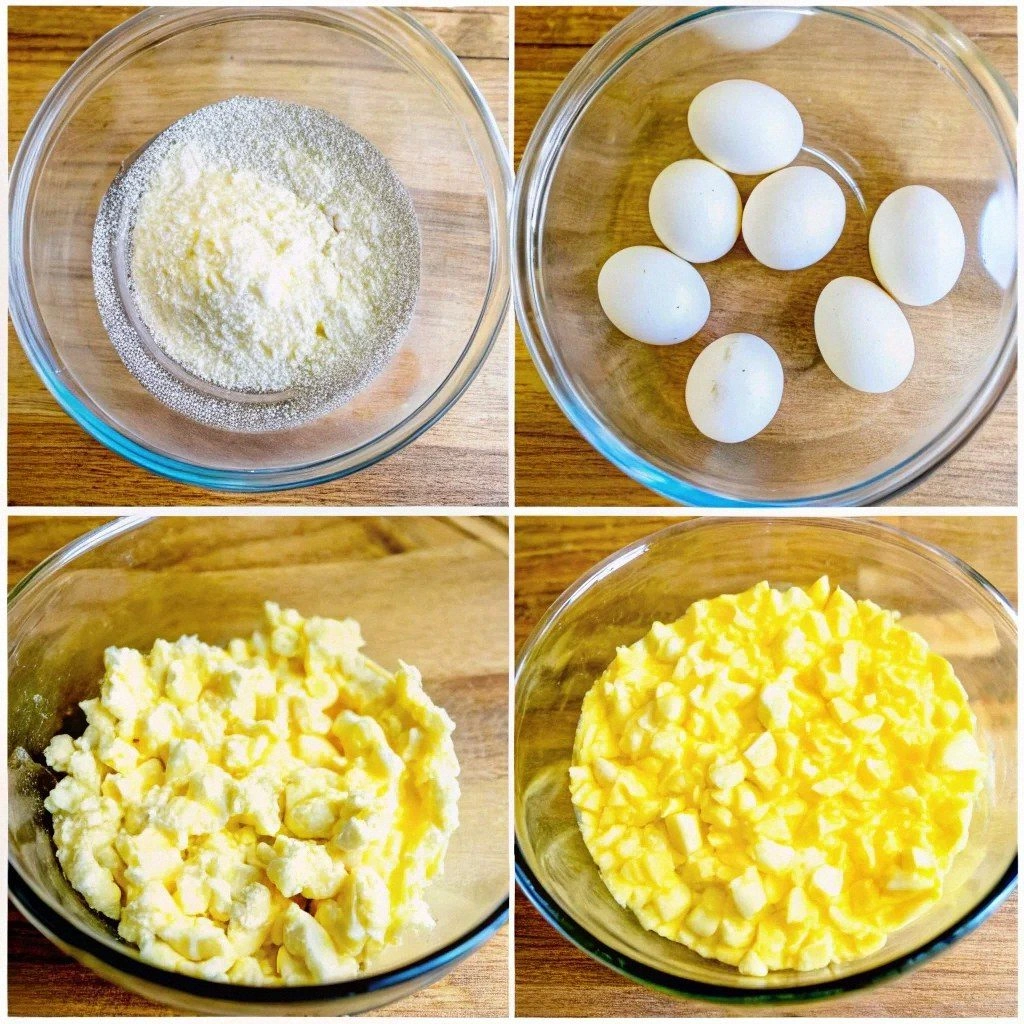
The Method — Step by Step
- Start with room temperature eggs — this prevents cracking when they hit the hot water. Place them in a single layer in a saucepan and cover with cold water by one inch. Add a splash of vinegar (this helps with peeling if an egg cracks) and bring to a rolling boil over medium-high heat. Once boiling, cover the pot, turn off the heat, and set your timer for 12 minutes exactly. This is the sweet spot for fully cooked but still tender yolks without that dreaded green ring. While they cook, prepare an ice bath in a large bowl — this stops the cooking process immediately and makes peeling easier.
- After 12 minutes, transfer the eggs to the ice bath and let them chill for at least 5 minutes. This is when the magic happens — the eggs contract slightly from the cold, creating a tiny gap between the white and the shell that makes peeling a dream instead of a nightmare. Gently tap each egg all over on the counter and roll it under your palm to crack the shell evenly. Start peeling from the wider end where there's usually an air pocket. If you're struggling, peel under running cold water — it helps separate the membrane from the white.
- Slice each egg in half lengthwise and separate the whites from the yolks. Chop the whites into small, even pieces — about 1/4-inch dice. You want them small enough to integrate well but not so tiny they disappear into the dressing. Place them in a large bowl. The yolks should be bright yellow and creamy, not chalky or green-tinged. If you see any gray or green, those eggs are overcooked — they'll still work but won't give you that beautiful golden color we're after.
- In a separate bowl, mash the yolks with a fork until they're completely smooth and no lumps remain. This is crucial for a creamy texture — nobody wants to bite into a dry chunk of yolk. Add the mayonnaise, Dijon mustard, lemon juice, and all your seasonings. Mix thoroughly until you have a smooth, golden base that looks like sunshine in a bowl. Taste it at this point — it should be well-seasoned and bright. If it tastes flat, add a pinch more salt or a few extra drops of lemon.
- Gently fold the chopped egg whites and your prepared vegetables into the yolk mixture. Use a spatula and make figure-eight motions, scraping the bottom and sides of the bowl. The goal is to coat every piece evenly without breaking up the whites too much. Over-mixing leads to mushy salad that loses its textural contrast. You should still see distinct pieces of white and the vegetables should be distributed throughout, not sunk to the bottom.
- Cover the bowl with plastic wrap pressed directly onto the surface to prevent a skin from forming. Refrigerate for at least 30 minutes before serving — this is when the flavors meld and develop. If you taste it immediately, it'll seem under-seasoned. After chilling, the salt distributes evenly and the acid mellows slightly. Overnight is even better if you can wait that long (I usually can't).
- When ready to serve, give it a final taste and adjust seasonings. Sometimes it needs a pinch more salt or a squeeze of lemon to brighten it up. If it's too thick (which can happen after refrigeration), thin it with a teaspoon of water or milk. Stir gently — you want to loosen it, not break it down. Serve cold, but not ice cold — 10 minutes at room temperature brings out the flavors.
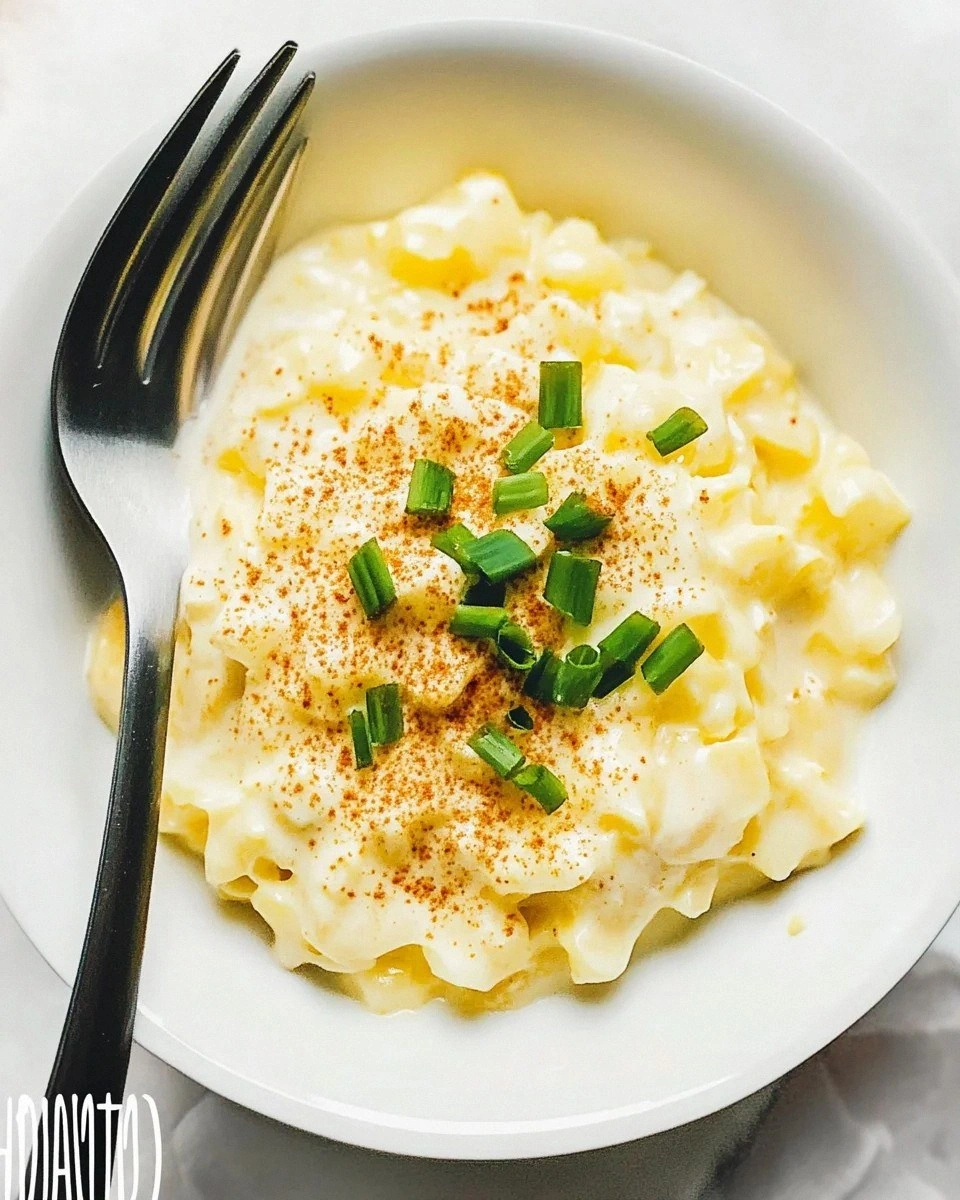
- For the best presentation, use an ice cream scoop to portion it onto plates or into sandwiches. This gives you those perfect rounded mounds that look professional instead of the sad spoon-dropped blobs. Garnish with a sprinkle of paprika, some fresh herbs, or a twist of lemon peel. If you're making sandwiches, butter the bread first — it prevents the salad from making the bread soggy and adds richness that complements the eggs perfectly.
- Storage is crucial for maintaining quality. Keep it in an airtight container with plastic wrap pressed directly on the surface. It'll stay fresh for up to 5 days, though the vegetables will lose some crunch after day 3. If it separates slightly, just give it a gentle stir — a little liquid on top is normal and actually keeps it from drying out. Never leave it at room temperature for more than 2 hours, and don't freeze it — the texture becomes grainy and watery when thawed.
That's it — you did it. But hold on, I've got a few more tricks that'll take this to another level...
Insider Tricks for Flawless Results
The Temperature Rule Nobody Follows
Starting with room temperature ingredients isn't just food snobbery — it's science. Cold eggs hit hot water and the whites seize up, creating that rubbery texture nobody likes. Cold mayo doesn't blend smoothly with the yolks, leaving you with little white flecks instead of a unified sauce. Take everything out of the fridge 30 minutes before you start, or if you're impatient (like me), submerge the eggs in warm water for 5 minutes and microwave the mayo for 5 seconds. Your future self will thank you when you're not picking mayo lumps out of your beautiful golden base.
Why Your Nose Knows Best
Smell your eggs before cooking — seriously. Fresh eggs should smell like nothing, or maybe faintly of the farm if they're really fresh. Any sulfur smell means they're past prime and will give you that "eggy" odor that turns people off egg salad. Same goes for your mayo — if it smells sharp or acidic instead of neutral, it's turning and will ruin everything. Trust your nose over expiration dates every time. I've used eggs a week past their date that were perfect, and tossed supposedly fresh ones that smelled off.
The 5-Minute Rest That Changes Everything
After mixing, let your salad rest for 5 minutes before the long chill. This brief pause allows the salt to start dissolving and the flavors to begin melding. Give it one gentle fold after this rest — you'll notice it's already starting to come together. This is also when you can assess if you need more mayo or acid. The mixture will thicken slightly as the egg proteins absorb some of the moisture, so what looked perfectly creamy might seem dry after resting. Better to find out now than after it's been chilling for hours.
The Texture Sweet Spot
Here's where most people go wrong — they either mash everything into baby food or leave big chunks that feel like you're eating egg salad with egg salad on the side. The key is variety in textures. Some pieces should be small enough to blend with the dressing, others should be larger for satisfying bites. Think of it like good ice cream with mix-ins — you want the base smooth but with interesting bits throughout. When chopping, aim for about 70% small dice and 30% slightly larger pieces.
Seasoning in Stages
Seasoning isn't a one-and-done deal. You season the yolk base, then adjust after mixing, and finally taste after chilling. Salt behaves differently at different temperatures, and what tastes perfectly seasoned when warm can taste flat when cold. Keep some finishing salt on hand — a few flakes of good sea salt sprinkled on top just before serving adds little pops of salinity that wake up your palate. It's like the difference between a flat painting and one with highlights that make it pop.
The Fresh Factor
Fresh herbs make such a difference that I keep a small herb garden just for egg salad season. Dried herbs taste dusty and one-dimensional in this context. If you must use dried, use half the amount and let them bloom in the lemon juice for 10 minutes before mixing. This rehydrates them and brings out more flavor. But seriously, even dried parsley from the dollar store is better than the fresh herbs that have been sitting in your fridge for three weeks. Fresh herbs should smell bright and look perky, not wilted and sad.
Creative Twists and Variations
This recipe is a playground. Here are some of my favorite ways to switch things up:
The Everything Bagel Remix
Swap the regular salt for everything bagel seasoning and add a schmear of cream cheese along with the mayo. The cream cheese adds tang and richness that makes it taste like you're eating your favorite bagel, minus the carbs. Top with thinly sliced radishes for peppery crunch and a sprinkle of fresh dill. This version is especially good on pumpernickel bread or as a dip for vegetables. I once brought this to a brunch and people literally scraped the bowl clean with their fingers when the crackers ran out.
Curry in a Hurry
Add a teaspoon of your favorite curry powder and a handful of golden raisins. The curry adds warmth and depth while the raisins provide sweet pops that complement the savory eggs. Include some chopped cilantro and a squeeze of lime juice to brighten everything up. This version is incredible in lettuce cups or as a filling for hollowed-out tomatoes. It's like taking your taste buds on a trip to India without leaving your kitchen.
The BLT Mashup
Fold in some crispy bacon bits and chopped sun-dried tomatoes. The bacon adds smokiness and crunch while the tomatoes provide concentrated umami that makes this taste like the world's best BLT got turned into a salad. Use the oil from the sun-dried tomatoes instead of some of the mayo for extra flavor. Serve on toasted bread with crisp lettuce — it's like having all the best parts of a BLT without the tomato slide that happens when you bite into a sandwich.
Mediterranean Dream
Add chopped Kalamata olives, crumbled feta cheese, and some diced cucumber (seeds removed). The briny olives and tangy feta transport you straight to a Greek island. Fresh oregano works better than dill here, and a splash of red wine vinegar instead of lemon juice gives it that authentic Mediterranean edge. This version is amazing stuffed into pita pockets or served alongside grilled vegetables. I make a batch of this for beach trips — it tastes better the longer it sits and doesn't mind the heat as much as mayo-heavy versions.
Spicy Southwest
Mix in some chipotle peppers in adobo sauce, chopped pickled jalapeños, and fresh cilantro. The smoky heat from the chipotles is balanced by the bright acidity of the pickled jalapeños. Add some corn kernels for sweetness and crunch. This version needs sturdy bread — think crusty rolls or thick-sliced sourdough — because the extra moisture from the peppers can make regular sandwich bread fall apart. It's like egg salad decided to take a vacation to Mexico and came back with stories to tell.
Everything-Free Option
For those with allergies or aversions, this works beautifully with vegan mayo and without any added vegetables. The key is boosting flavor with extra seasonings — smoked paprika, garlic powder, and plenty of fresh herbs. You can also add mashed avocado for creaminess and healthy fats. It won't have the exact same flavor, but it's surprisingly close and still delicious. My niece with multiple food allergies practically lives on this version, and she says it's better than the "real thing" she remembers.
Storing and Bringing It Back to Life
Fridge Storage
Store your egg salad in the coldest part of your fridge, usually the back of the bottom shelf. Use an airtight container — glass is best because it doesn't absorb odors like plastic can. Press plastic wrap directly onto the surface before sealing to prevent oxidation and that gross skin that forms on top. It'll stay fresh for up to 5 days, though the vegetables will lose some crunch after day 3. If you see any liquid pooling on top, just stir it back in — it's normal separation, not spoilage. The sniff test never fails — if it smells off, toss it, no matter what the date says.
Freezer Friendly? Not Really.
I know, I know — you want to make a huge batch and freeze portions for later. Trust me, I've tried every method, and freezing egg salad is a one-way ticket to texture disaster. The mayo separates into an oily mess, the eggs get rubbery, and the vegetables turn to mush. However, you can freeze hard-boiled eggs (without the mayo) for up to 3 months. Just thaw them in the fridge overnight and make fresh dressing when you're ready. It's an extra step, but the alternative is throwing out a whole batch of what was once delicious food.
Best Reheating Method
Here's the thing — you don't reheat egg salad. It's meant to be served cold. But if you've had it in a super cold fridge and it's almost frozen-solid, let it sit at room temperature for 10-15 minutes before serving. If it's thickened up too much after chilling, stir in a teaspoon of water or milk to loosen it. For sandwich fillings, I sometimes warm the bread slightly while keeping the salad cold — the contrast is lovely. If you're using it as a dip and want it less stiff, microwave for literally 3-4 seconds — any more and you'll have scrambled egg salad, which is as unappetizing as it sounds.