I once tried to make a simple breakfast toast and ended up with soggy bread, wilted tomatoes, and a kitchen that smelled like a wet towel. That disaster sparked a dare from my roommate: “Make something that actually looks and tastes like it belongs on a brunch menu.” I accepted, and after a few frantic experiments, I finally cracked the code for the ultimate Tomato and Cottage Cheese Toast. This version is the result of a midnight snack gone right, a sprinkle of confidence, and a whole lot of tasting—yes, I ate half the batch before anyone else got a chance. If you’ve ever struggled with soggy toast or bland toppings, you’re not alone, and I’ve got the fix.
Picture yourself standing at the kitchen counter, the scent of toasted bread mingling with the sweet acidity of fresh tomatoes, and a glossy drizzle of olive oil catching the morning light. You hear the faint crackle of the pan as the bread hits the heat, the gentle thump of the knife as it slices ripe tomatoes, and the soft whisper of basil leaves being torn. The texture under your fingertips is a perfect contrast: crisp edges that shatter like thin ice, a creamy cottage cheese spread that feels like velvet, and juicy tomato bursts that explode with sunshine. The taste? A harmonious dance of tangy, salty, and herbaceous notes that makes your palate do a little happy jig.
What makes this version stand out isn’t just the ingredients—though each one is chosen with obsessive care—but the method that turns a humble slice of bread into a star‑studded plate. Most recipes get the balance wrong, either drowning the toast in soggy cheese or scattering tomatoes that never get that caramelized kiss. Here, I’m using a quick sear on the bread to lock in crunch, a light drizzle of olive oil to add Mediterranean flair, and a secret technique of gently warming the cottage cheese so it spreads like a silk sheet without breaking the toast’s structure. I dare you to taste this and not go back for seconds.
And now, the teaser you’ve been waiting for: I’m going to introduce a tiny splash of balsamic reduction at the very end, a twist that adds a whisper of sweetness and a glossy finish that looks as good as it tastes. Okay, ready for the game‑changer? Let me walk you through every single step — by the end, you’ll wonder how you ever made it any other way.
What Makes This Version Stand Out
- Flavor Explosion: The combination of tangy cottage cheese and bright tomatoes creates a taste profile that’s both refreshing and satisfying, like a summer garden on a plate.
- Texture Symphony: Crunchy toasted bread, creamy cheese, and juicy tomato pieces each play their part, delivering a mouthfeel that’s impossible to resist.
- Simplicity Meets Sophistication: Only seven core ingredients, yet the result feels like a dish you’d order at a boutique café.
- Ingredient Quality: Using high‑quality olive oil and fresh basil turns ordinary pantry staples into gourmet components.
- Crowd‑Pleaser: Whether it’s a quick breakfast, a brunch buffet, or a light snack, this toast earns applause from kids and adults alike.
- Versatile Cooking Method: You can finish it in a skillet, under a broiler, or even on a grill for that smoky nuance.
- Make‑Ahead Potential: Prep the cheese spread and tomato mixture ahead of time; the final assembly takes under five minutes.
- Nutrition Boost: Packed with protein from cottage cheese and antioxidants from tomatoes, it fuels you without the guilt.
Inside the Ingredient List
The Flavor Base
Fresh tomatoes are the heart of this dish. Their natural acidity cuts through the richness of the cottage cheese, while their juice adds a burst of juiciness that keeps each bite lively. If you skip the tomatoes, you lose that essential zing, and the toast can feel flat. Choose heirloom tomatoes for a sweet, buttery flavor, or go with Roma for a meatier bite. Pro tip: look for tomatoes that are fully ripe but firm—those will hold their shape when diced.
The Texture Crew
Cottage cheese brings a creamy, slightly tangy component that spreads like a cloud over the toast. Its protein punch makes the dish more filling, and the small curds add a subtle chew that’s delightfully different from smooth cream cheese. If you’re allergic to dairy, a thick Greek yogurt can stand in, though you’ll miss the signature curd texture. When selecting cottage cheese, opt for the low‑fat version if you’re watching calories, but don’t shy away from the full‑fat version for a richer mouthfeel.
The Unexpected Star
Olive oil isn’t just a cooking fat; it’s a flavor carrier. A drizzle of extra‑virgin olive oil before toasting gives the bread a glossy finish and a subtle fruitiness that elevates the whole dish. If you use a low‑quality oil, the toast can taste greasy and lose its bright notes. I always keep a small bottle of cold‑pressed olive oil within arm’s reach for this very reason.
The Final Flourish
Fresh basil or microgreens add a pop of color and an aromatic lift that makes the toast feel fresh and spring‑like. Basil’s peppery sweetness pairs perfectly with tomatoes, while microgreens bring a delicate crunch and a nutritional boost. If you forget the herbs, the dish still works, but you’ll miss that final aromatic punch. When buying basil, look for deep green leaves without black spots; they’ll last longer and retain their flavor.
Everything's prepped? Good. Let's get into the real action…
The Method — Step by Step
Gather all your ingredients and set them out on a clean countertop. I like to line up the bread slices, a bowl of cottage cheese, diced tomatoes, and a small dish of olive oil. This visual organization helps you stay focused and prevents you from scrambling for items mid‑process. The kitchen should feel like a stage, and you’re the star—so make sure the spotlight (your prep area) is clear.
Preheat a large non‑stick skillet over medium‑high heat. Add a thin drizzle—about one tablespoon—of olive oil and let it shimmer. When the oil starts to ripple, it’s ready; you’ll hear a faint sizzle as the bread meets the pan. This is the moment of truth: the oil must be hot enough to toast quickly but not so hot that it burns. Watch Out: If the oil smokes, lower the heat immediately; burnt oil will give the toast a bitter taste.
Place the bread slices in the skillet, pressing them gently with a spatula. Let them toast for 45 seconds, then flip and toast the other side for another 45 seconds. You’ll notice the edges turning golden and the surface developing tiny air pockets. The aroma at this point is pure comfort—think toasted wheat mingling with a hint of olive oil. If you prefer a darker crust, add an extra 10 seconds per side, but keep an eye on them; they can go from perfect to charred in a heartbeat.
While the bread is toasting, whisk the cottage cheese in a bowl with a pinch of salt, a dash of pepper, and a drizzle of olive oil. This step is crucial: the oil loosens the cheese, making it spreadable without turning watery. I like to use a fork to break up any larger curds, creating a smooth yet slightly textured base. Kitchen Hack: Add a squeeze of lemon juice if you want a brighter tang that mimics the acidity of the tomatoes.
Once the bread is beautifully toasted, transfer it to a wire rack for a minute to let excess steam escape. This prevents the bottom from becoming soggy when you add the cheese later. While the toast cools slightly, toss the diced tomatoes with a pinch of salt, pepper, and a splash of olive oil. Let them sit for 5 minutes; this simple maceration draws out their juices, intensifying flavor.
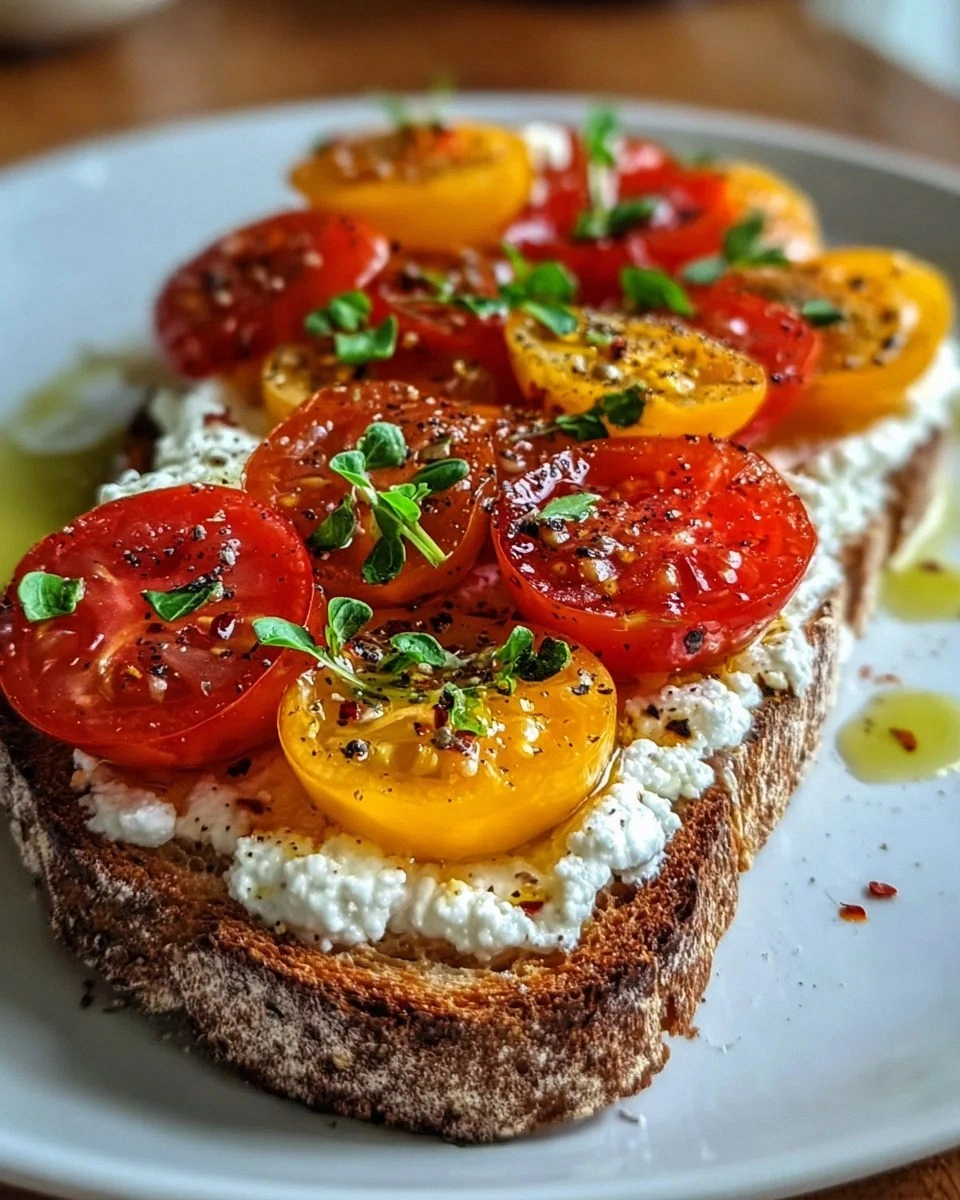
Spread a generous layer of the seasoned cottage cheese onto each toast slice. Use the back of a spoon to smooth it out, leaving a thin border of bread exposed so you still get that crunchy edge. The cheese should melt just a touch from the residual heat of the toast, creating a velvety coating that clings without sliding off.
Top each cheese‑laden toast with a heap of the macerated tomatoes. Distribute them evenly so every bite gets a burst of juiciness. Sprinkle freshly torn basil leaves or microgreens on top, then, if you like a little heat, dust a pinch of red pepper flakes. The final drizzle—just a teaspoon of olive oil and, if you’re feeling fancy, a swirl of balsamic reduction—adds shine and a subtle sweet‑sour note that ties everything together.
Serve immediately while the toast is still warm and the cheese is just barely melting. The contrast between the hot, crisp bread and the cool, fresh tomatoes creates a sensory rollercoaster that’s hard to beat. Pair with a strong coffee or a light herbal tea, and you’ve got a breakfast that feels like a celebration. I’ll be honest — I ate half the batch before anyone else got to try it, but that’s the proof that this is hands down the best version you’ll ever make at home.
That's it — you did it. But hold on, I've got a few more tricks that'll take this to another level…
Insider Tricks for Flawless Results
The Temperature Rule Nobody Follows
Most home cooks toast bread on low heat, which yields a pale, limp slice. The secret is to crank the skillet to medium‑high and keep the heat steady. This creates a rapid Maillard reaction, giving you those coveted golden‑brown speckles. If your stove runs hot, keep a close eye—just 45 seconds per side is enough. I once left a slice in too long; the result was a charcoal stick that could double as a kitchen torch.
Why Your Nose Knows Best
Before you even taste, trust the aroma. When the toast starts to emit a nutty, buttery scent, you’re at the perfect moment to flip. If you rely solely on a timer, you might miss that subtle cue and end up with uneven browning. My kitchen is a symphony of smells, and the toast’s perfume is the lead violin.
The 5‑Minute Rest That Changes Everything
After the bread is toasted, let it rest on a wire rack for exactly five minutes. This short pause allows steam to escape, preserving crunch. It also gives the cheese a moment to settle, preventing it from sliding off when you add the tomatoes. A friend once skipped this step and ended up with a soggy mess; lesson learned, right?
Seasoning Layers Like a Pro
Season each component separately—salt the tomatoes, pepper the cheese, and finish with a pinch of sea salt on the assembled toast. This layered approach builds depth, ensuring every bite is balanced. If you dump all the seasoning at once, the flavors become muddled and you lose that bright pop of freshness.
The Balsamic Glaze Finish
A quick reduction of balsamic vinegar (half a cup simmered until thick) adds a glossy, sweet‑tart glaze that transforms the dish from everyday to restaurant‑worthy. Drizzle just a teaspoon over each toast right before serving; the glaze will set into a thin, caramelized sheen that catches the light and the eye. This is pure magic, and it’s the reason people keep coming back for more.
Creative Twists and Variations
This recipe is a playground. Here are some of my favorite ways to switch things up:
Avocado Dream
Swap half of the cottage cheese for ripe avocado mashed with a squeeze of lime. The result is a buttery, green‑tinted spread that pairs beautifully with the tomatoes and adds extra healthy fats. Avocado lovers will adore the creamy texture and subtle earthiness.
Spicy Sriracha Kick
Mix a teaspoon of sriracha into the cottage cheese before spreading. The gentle heat permeates the whole toast, and the bright red hue makes it look as bold as it tastes. Pair with a cooling cucumber salad to balance the heat.
Mediterranean Olive Medley
Chop a handful of Kalamata olives and stir them into the tomato mixture. The briny olives add depth and a salty punch that complements the cheese. This version feels like a mini antipasto on toast.
Cheesy Herb Fusion
Add a sprinkle of grated Parmesan or Pecorino to the cottage cheese mixture. The extra cheese melts slightly during the final assembly, creating a richer, umami‑laden topping that’s perfect for cheese aficionados.
Sweet & Savory Apple
Thinly slice a crisp apple (like Honeycrisp) and layer it under the tomatoes. The apple’s subtle sweetness and crunch contrast with the tangy cheese, making a delightful sweet‑savory combo that’s perfect for autumn brunches.
Storing and Bringing It Back to Life
Fridge Storage
Place the toasted bread in an airtight container, and store the cottage cheese spread in a separate sealed jar. Keep the diced tomatoes in a small bowl covered with plastic wrap. The components stay fresh for up to 2 days. When ready to eat, reassemble and give the toast a quick 2‑minute blast in a preheated oven at 350°F to revive the crunch.
Freezer Friendly
You can freeze the toasted bread slices and the cheese spread separately. Wrap the bread tightly in foil, then place in a freezer bag. The cheese spread can be portioned into silicone ice‑cube trays and frozen. To use, thaw the bread at room temperature, warm the cheese gently in a microwave, and follow the assembly steps. The texture remains delightful if you toast the bread again for a minute.
Best Reheating Method
For the ultimate reheated toast, preheat a skillet over medium heat, add a splash of water (just a teaspoon) to the pan, and cover with a lid for 30 seconds. The steam revives the bread’s crispness while keeping the cheese from drying out. This trick works better than a microwave, which tends to make the toast rubbery.